
How Municipal Court Warrants Work
A municipal warrant is court process for a matter inside one city's authority. Rome Municipal Court says it may issue warrants and hear misdemeanor traffic, city ordinance, environmental, civil, and animal-control cases within Rome. Cave Spring runs its own courtroom and citation path. Neither city's payment tool doubles as a warrant database. Skip a required appearance and a bench warrant may follow. Rome also warns of added fees, possible DDS license or privilege action, and arrest if law enforcement stops you. Still, one label on a record does not settle everything. Ask the issuing court whether the entry is a bench warrant, capias, FTA, citation balance, or some other process, and what formal act recalls it. Only the court controls issuance and recall. A police records office, a sheriff portal, a GCIC or NCIC entry, and the court docket all relate to the same case, yet they may not refresh together. For true Floyd County warrant status, get confirmation from the city court that owns the case, because no other office in Floyd County can give you the final word.
Municipal Courts Across Floyd County
Floyd County contains just two incorporated cities: Rome and Cave Spring. Their courts differ so much in scale and schedule that a single generic warrant instruction would misroute you.
| City | Municipal court and scope | Warrant channel | Phone |
|---|---|---|---|
| Rome | Rome Municipal Court; city-limit traffic and ordinance cases | Court administrator, Rome Police records or warrant clerk, then FCSO if referred | 706-238-5150 or 706-238-5151 |
| Cave Spring | City Hall courtroom; first Monday monthly at 3:30 p.m., except holiday changes | City Hall or court clerk, then FCSO if referred | 706-777-3382 |
Rome Municipal Court shares a building with Rome Police at 375 Technology Parkway. Cave Spring's court meets at 10 Georgia Avenue. Do not confuse either with the county courthouse at Government Plaza or the jail on New Calhoun Highway. Call before you travel, since an active warrant can turn a visit into custody.
Floyd County Municipal Warrant Checks
Neither Rome nor Cave Spring publishes a public municipal warrant database. The strongest Floyd County check pairs the issuing court with city police or the sheriff, whichever route the court directs. Gather your details first. Have a citation or case number, full name, date of birth, city, original court date, and any prior receipt in hand.
- Identify the city shown on the citation or notice. Call Rome Municipal Court for a Rome matter or Cave Spring City Hall for a Cave Spring matter.
- Ask whether the case shows a missed date, mandatory appearance, active city warrant, capias, recall, or another disposition. Request the exact court term.
- Use the city payment portal only if the clerk says the case is eligible. Rome bars online payment for mandatory appearances; Cave Spring’s tools search citations, not warrants.
- For Rome, the official police directory separates Records Division, open records, the Municipal Court Administrator, and a Warrant Clerk. Use the office the court identifies.
- If the city routes service or countywide status to FCSO, call the Warrant Division at 706-236-2466 or check the current linked CentralSquare portal.
- Request existing non-exempt records through the correct city custodian or Floyd NextRequest when the county maintains them. A records response is not instant clearance.
Georgia runs no single centralized public warrant search. That means a Floyd County resident may need a city court check and a sheriff check side by side. An in-person self-check can end in custody, so ask about that risk and consider counsel before you walk in.
Floyd County Rome Municipal Warrants
Rome Municipal Court holds warrant authority inside the city limits. Its official appearance page says anyone who has not paid before the court date must appear. Mandatory appearances cannot be cleared through the online fine route. Need an emergency continuance? Ask at once and back it up in writing. Rome's public directory splits the work among police Records, open-records requests, the Municipal Court Administrator, and a Warrant Clerk. That division matters for a Floyd County warrant search. A police incident record will not tell you whether a judge recalled a warrant, and a payment record will not show service status. Ask which office controls each fact before you chase it.
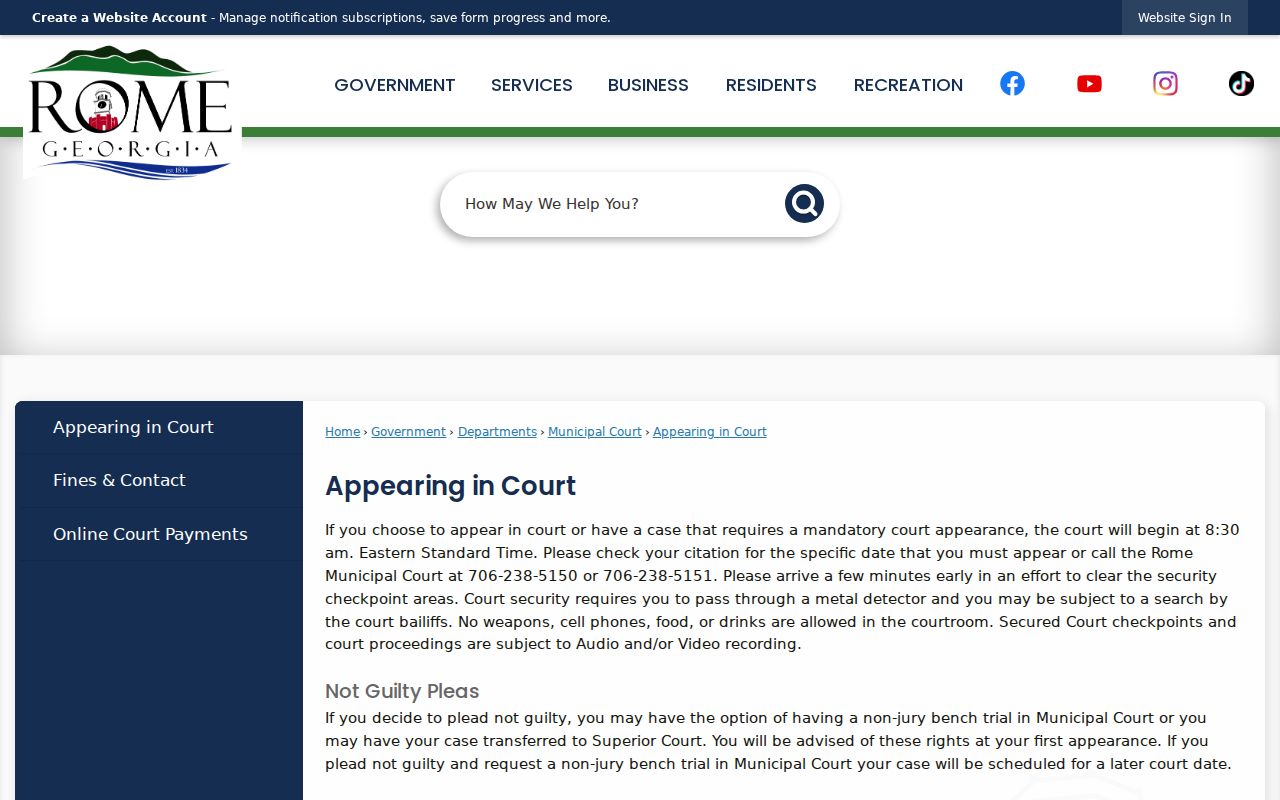
The warning from Rome ties a missed date to court action, which is why direct confirmation should come before any online payment. In Floyd County, that city's notice is blunt about consequences. Note: Rome Police warns that it never calls people to demand payment for citations or the issuance of warrants.
Floyd County Municipal Warrants: What They Show
A Floyd County municipal warrant record can show the type of process and the city case behind it. What appears varies by system. No official city schema promises every field. The issuing clerk can explain the terms and hand over an existing public record where access law allows it.
| Warrant or cause number | A local identifier, such as synthetic sample 26R01234; the code should not be decoded without the court. |
|---|---|
| Underlying matter | A city citation, ordinance case, traffic matter, or missed court duty. |
| Issuing court | Rome or Cave Spring Municipal Court, which controls the next disposition. |
| Warrant type | Bench warrant, capias, or another court label that needs clerk confirmation. |
| Fine or bond | A displayed amount is separate from whether payment is allowed or recall has occurred. |
| Status | Active, served, recalled, or another time-specific court or agency label. |
Save every court order, receipt, and notice. If a judge recalls the process, ask when the order will reach city police, FCSO, GCIC, and NCIC. Portal lag is not a new judicial act in Floyd County or anywhere else.
Floyd County Cave Spring Warrants
Cave Spring Municipal Court meets at City Hall on the first Monday of each month at 3:30 p.m., barring holiday adjustments. The date printed on your citation controls your duty. The city posts no warrant portal and no warrant-only phone line, so the clerk is the documented starting point for any Floyd County warrant question here. Cave Spring links two payment vendors. Government Window offers a Traffic Tickets menu. The nCourt flow demands a citation number and warns that a ticket may take five days to appear. Treat both as citation payment searches. A blank result does not prove no city warrant exists, and a receipt does not prove a recall.

That monthly schedule points you back to City Hall in person. Go there when an online citation search comes up empty or a date was missed.
Clearing a Municipal Court Warrant
Clearing a Floyd County municipal warrant means following the rules of the city court that issued it. No walk-in surrender program exists. Depending on the case, the court may direct a payment, a scheduled appearance, a plea, bond, counsel, or a judicial motion. Staff can explain process but cannot give legal advice.
- Confirm the city, warrant type, status, case number, and exact court obligation.
- Ask whether appearance is mandatory and whether paying an eligible fine would address only the balance or also the warrant.
- If custody, surrender, or transfer may occur, consult counsel and ask about bond before going to court or jail.
- Complete the court-approved act and obtain a receipt, disposition, or signed recall order.
- Ask when the city will send the change to FCSO and GCIC/NCIC, then confirm the public record after that time.
Warning: A city payment receipt does not by itself prove a Floyd County municipal warrant was recalled; obtain confirmation from the issuing court.
Rome warns that a transferred matter may require bond and may lead to transport to Floyd County Jail. That caution comes from Rome alone. It is not a promise about every municipal case. The Floyd County traffic warrant route explains citations and FTA consequences in more depth.
Floyd County Municipal Payment Limits
In Floyd County, a municipal payment screen answers one narrow question: whether a citation can be found and money accepted. Warrant status is a separate court matter. Rome bars mandatory appearances from online payment. Cave Spring's citation tools show no warrant field. Paying without asking the clerk first may leave an appearance or recall step still open.
- Citation
- The city charge or notice that starts the case; it is not automatically a warrant record.
- FTA
- Failure to appear, which may prompt a court warrant and, for traffic matters, separate DDS action.
- Recall
- A court-directed withdrawal of warrant process. A payment vendor cannot be assumed to issue it.
- Service
- The agency record of executing or returning process, distinct from the court disposition.
- Capias
- A custody-process term whose local meaning and effect must be confirmed from the issuing court record.
A portal and the clerk can disagree in Floyd County. Save the screen, ask the court for the operative record, and never repost a person's result or submit repeated payments.
Floyd County Municipal Warrant Boundaries
A Rome or Cave Spring warrant may later be visible to FCSO, yet the city court alone controls its recall. FCSO holds original warrants and updates GCIC and NCIC. Even so, the sheriff does not promise that every city warrant sits in the CentralSquare portal. A no-result is not a clearance. Magistrate Court issues county criminal warrants. Superior Court keeps felony case records. Probate Court handles traffic matters that arise outside any city limits. Federal process runs through the Northern District of Georgia, and a Floyd portal check does not complete it. If the municipal court no longer owns a matter, ask the city clerk where it was transferred. The official FCSO warrant page lays out the Warrant Division and its active-warrant route.
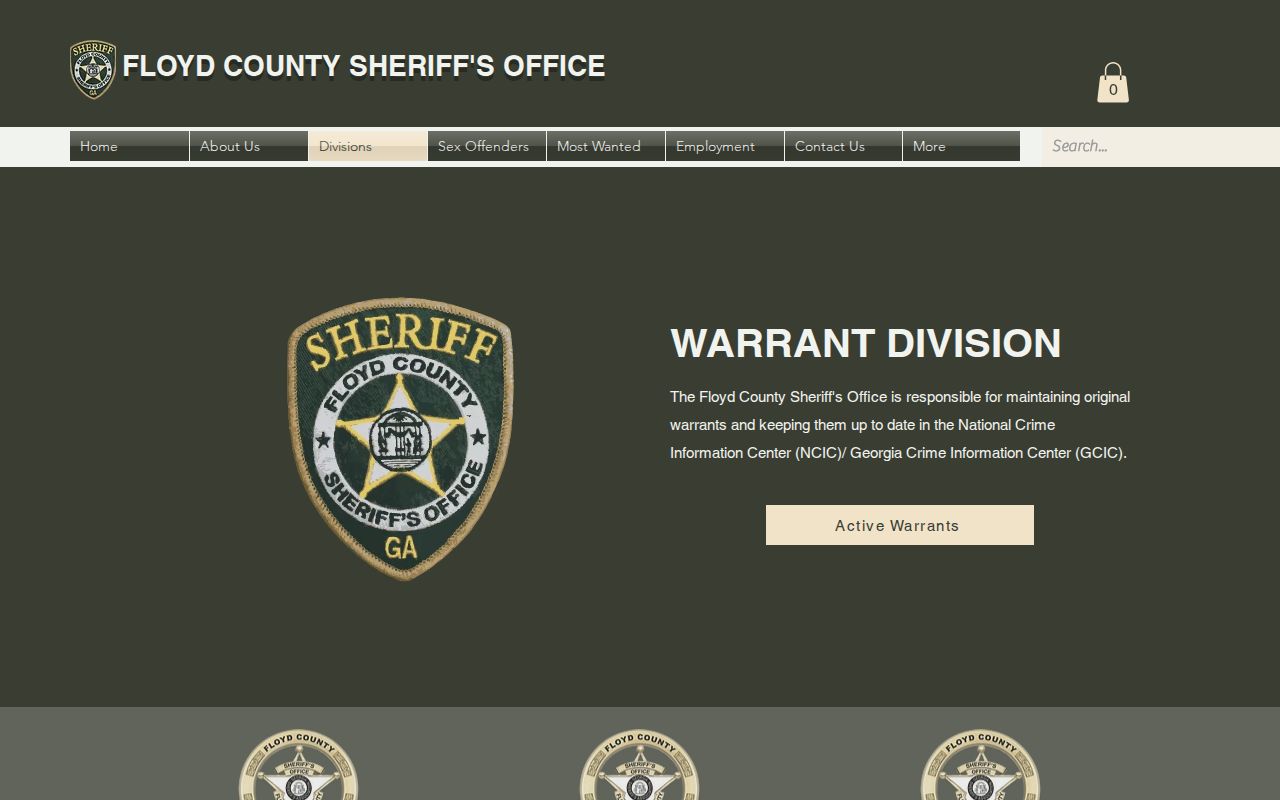
The sheriff channel adds countywide service confirmation without replacing the city court’s case record.
Floyd County Municipal Warrant Records Access
Georgia's Open Records Act lets anyone request existing public records unless an exemption applies. A Floyd County requester can seek their own citation, disposition, recall order, service return, or an existing municipal policy. Name the city, court, date range, and case identifier. Ask for the rest if anything is withheld. Investigation files, confidential sources, intelligence material, and sealed files can restrict access. Juvenile rules add limits. An agency need not write a new report under O.C.G.A. §50-18-71(j). Go to the city or court office for a Floyd County city record, not just a county request portal. The Georgia Attorney General's Open Government page gives the state-law starting point.
Key Point: Public access can supply an existing record, but only the issuing municipal court can confirm the current warrant status and recall procedure.
Note: Juvenile municipal records in Floyd County do not follow adult public-search rules and may stay confidential under Georgia law.