
How Bench Warrants Work in Floyd County
A bench warrant is a judge's order telling law enforcement to bring someone in after a required court act went undone. Missed appearances top the list. So do ignored orders and unresolved fines. The warrant attaches to the underlying case rather than creating a new charge. In Floyd County, which court issued it depends on where the case sits. Rome Municipal Court warns plainly that a failure to appear can bring a bench warrant, a Georgia Department of Driver Services action, or both. Cave Spring Municipal Court runs its own citations through its own clerk. Outside-city traffic tickets land in Probate Court. Other criminal process may move through Magistrate, State, or Superior Court. The word "capias" also describes process commanding custody, and Floyd County publishes no single glossary, so the clerk is the right person to ask what a label means in your case.
Rome's Floyd County Bench Warrant Warning
The Rome Municipal Court appearance page gives unusually direct local guidance for Floyd County drivers and defendants. A missed appearance there may trigger a bench warrant, a license or privilege suspension, added fees, and arrest during any traffic stop. Those are possibilities for the city case described, not a promise of what every Floyd County bench warrant brings. If a court date cannot be kept, contact the court right away and follow its continuance process. Online payment does not work for a mandatory appearance, and paying a fine does not by itself recall a warrant. The court action and any DDS consequence each need their own check. The official mandatory-appearance and failure-to-appear rules are set out on that city page.
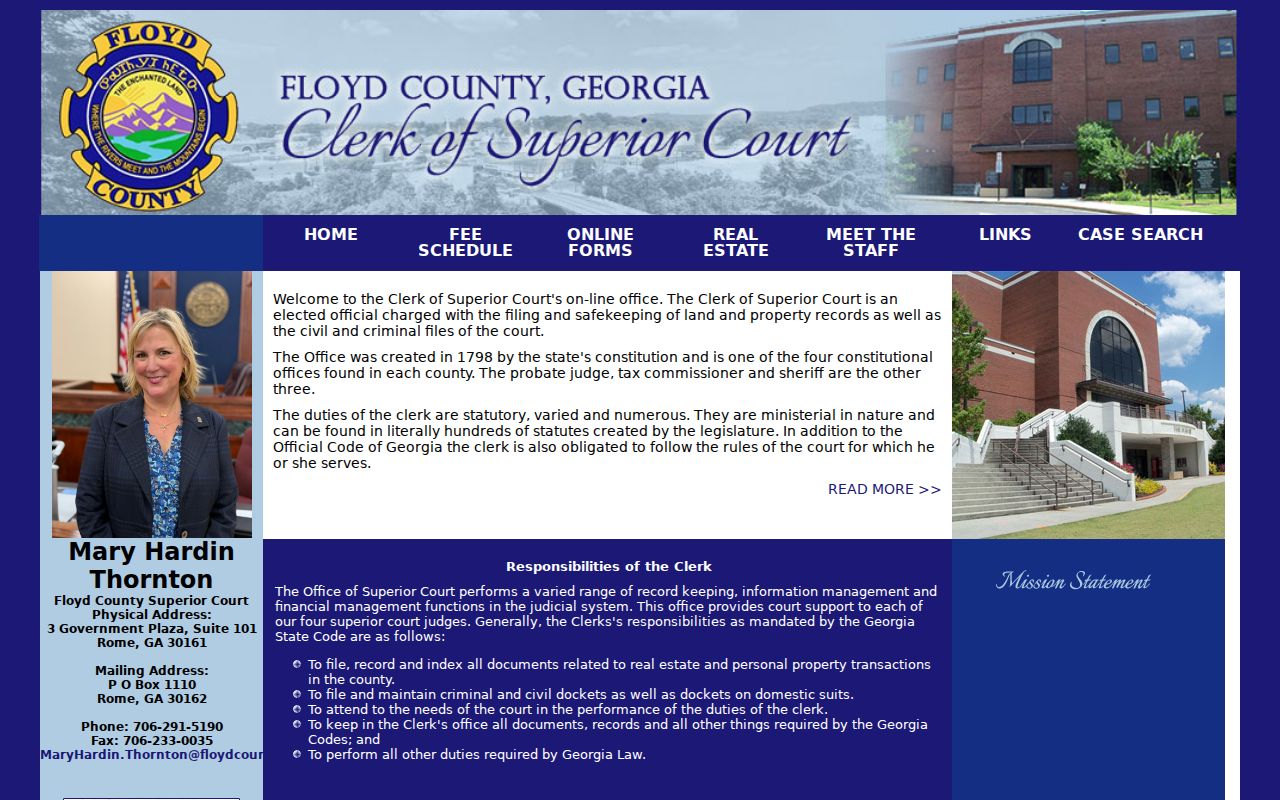
The official Rome page helps a Floyd County reader separate a required appearance from an ordinary fine-payment path.
Bench Warrant Issuance in Floyd County
A judge in an existing case may issue a Floyd County bench warrant once the docket shows a required event was missed. That route differs from an arrest-warrant application built on probable cause for a new offense. Court staff record the order. Law enforcement may then receive it for entry and service. The FCSO keeps original warrants and updates GCIC and NCIC.
The sequence can be summarized as: required setting → missed act or noncompliance → judicial order → warrant entry and service → appearance, recall, or other disposition. A clerical or portal update may follow the court event rather than happen at once. That lag is why a receipt, payment screen, or absent online row cannot stand alone as proof that the bench warrant is gone.
Note: No Floyd County court publishes a universal recall form, a fixed grace period, or a guaranteed same-day walk-in procedure.
Floyd County Courts That Issue Bench Warrants
In Floyd County, the issuing court controls the case and any order recalling or quashing its own warrant. The sheriff can confirm and serve process. Only the judge decides. Check the citation, notice, case number, or warrant entry to pin down the jurisdiction before paying or appearing.
| Matter | Likely Floyd County office | Contact |
|---|---|---|
| County criminal warrant or first appearance | Magistrate Court or named trial court | Magistrate: 706-291-5250 |
| Rome city citation or ordinance case | Rome Municipal Court | 706-238-5150 or 706-238-5151 |
| Cave Spring city case | Cave Spring Municipal Court or City Hall | 706-777-3382 |
| Traffic citation outside city limits | Floyd County Probate Court | 706-291-5136 |
| Countywide warrant status | FCSO Warrant Division | 706-236-2466 |
The Floyd County courts sit at 3 Government Plaza in Rome. Rome Municipal Court sits on Technology Parkway. The jail is on New Calhoun Highway. Call ahead so a bench-warrant question lands in the right office.
How Bench and Arrest Warrants Differ
Both orders can put a person in custody, but they grow from different events. A Floyd County bench warrant usually follows a missed court obligation. An arrest warrant follows an application or affidavit plus a judge's finding of probable cause on an alleged offense. That distinction tells you which file to review and which court response fits.
| Feature | Bench warrant | Arrest warrant |
|---|---|---|
| Usual basis | Missed court act or noncompliance | Probable cause for an alleged crime |
| Starting record | Existing docket or citation | Complaint, affidavit, or application |
| Best first court question | How can the warrant be recalled? | What court issued it and is bond set? |
| Possible response | Appearance, motion, compliance, bond | Counsel, surrender planning, bond |
A search warrant is different again. It authorizes a search for evidence, not the arrest of a named person. Floyd County Magistrate Court executes both arrest and search warrants for numerous agencies.
Floyd County Bench Warrant Terms
Floyd County records may use terms that sound alike but mark different stages. A capias is a writ commanding custody. A recall withdraws a warrant by court order. To quash means the court sets the warrant aside. Bond forfeiture deals with the loss or enforcement of a bond after required conditions go unmet.
- Bench warrant
- A judge's custody order tied to a missed court duty.
- Capias
- Process commanding arrest or custody; the exact Floyd use must be confirmed with the clerk.
- Recall
- A court order withdrawing the warrant.
- Quash
- A court act setting process aside.
- FTA
- Failure to appear for a required court date.
Assume no universal "capias pro fine" payment process exists. Floyd County publishes no countywide rule on it. Ask the issuing court whether payment is allowed, whether appearance is still mandatory, and whether a separate recall order is needed.
Clearing a Bench Warrant in Floyd County
First confirm the warrant and identify the Floyd County court that issued it. Talk to a Georgia criminal-defense attorney before appearing if custody is a risk. Counsel can weigh a negotiated appearance, a bond request, or a motion to recall or quash. Clerks explain procedure, not legal advice. A walk-in surrender may work, but no official Floyd County source promises one universal route. Call the Warrant Division and the issuing court first. Ask where to report, what identification to bring, whether a judge will be on hand, and whether bond is authorized. If booking is required, the FCSO bonding lobby sits at 2526 New Calhoun Highway and is described as open around the clock with a noon lunch closure. Confirm the current rules and the accepted bond method before you arrive.
Caution: Payment, a portal change, and judicial recall are separate events; retain the signed court order, receipt, bond papers, or disposition.
Floyd County Recall Records
Once the court acts, confirm how the update travels to FCSO and GCIC/NCIC. Portals refresh on their own schedule. The controlling order may be entered before any public site catches up, so hold your copies, the case number, the date, and the name of the office that confirmed the change. A traffic failure to appear can also trigger a DDS suspension. Verify the court sent its transmission first, then follow DDS reinstatement instructions. When no clear record exists, file a narrow request through Floyd County NextRequest, naming your own matter, the date range, and the originating agency. Georgia's Open Records Act does not force a custodian to invent a legal conclusion. Sealed and juvenile records may be withheld or routed elsewhere, so Floyd County may send those through a different process entirely.
- Save the warrant or citation reference.
- Confirm the issuing court.
- Follow the court's appearance or filing instructions.
- Keep proof of disposition.
- Confirm the database update.
Floyd County Magistrate Court's Role
Floyd County Magistrate Court handles arrest and search warrants for a long list of agencies: FCSO, Floyd County Police, Rome Police, the Georgia Bureau of Investigation, State Patrol, Department of Natural Resources, and Driver Services. It also runs civilian warrant applications, first appearances, bond hearings, and preliminary hearings. That reach has limits, though. A bench warrant from Rome Municipal Court stays with the Rome case. A Cave Spring matter starts in that city court. Superior or State Court can hold a warrant in its own docket too. When a Floyd County record is unclear, ask the Warrant Division where it belongs, then call the named clerk. The official criminal-services description lays out these local warrant functions.
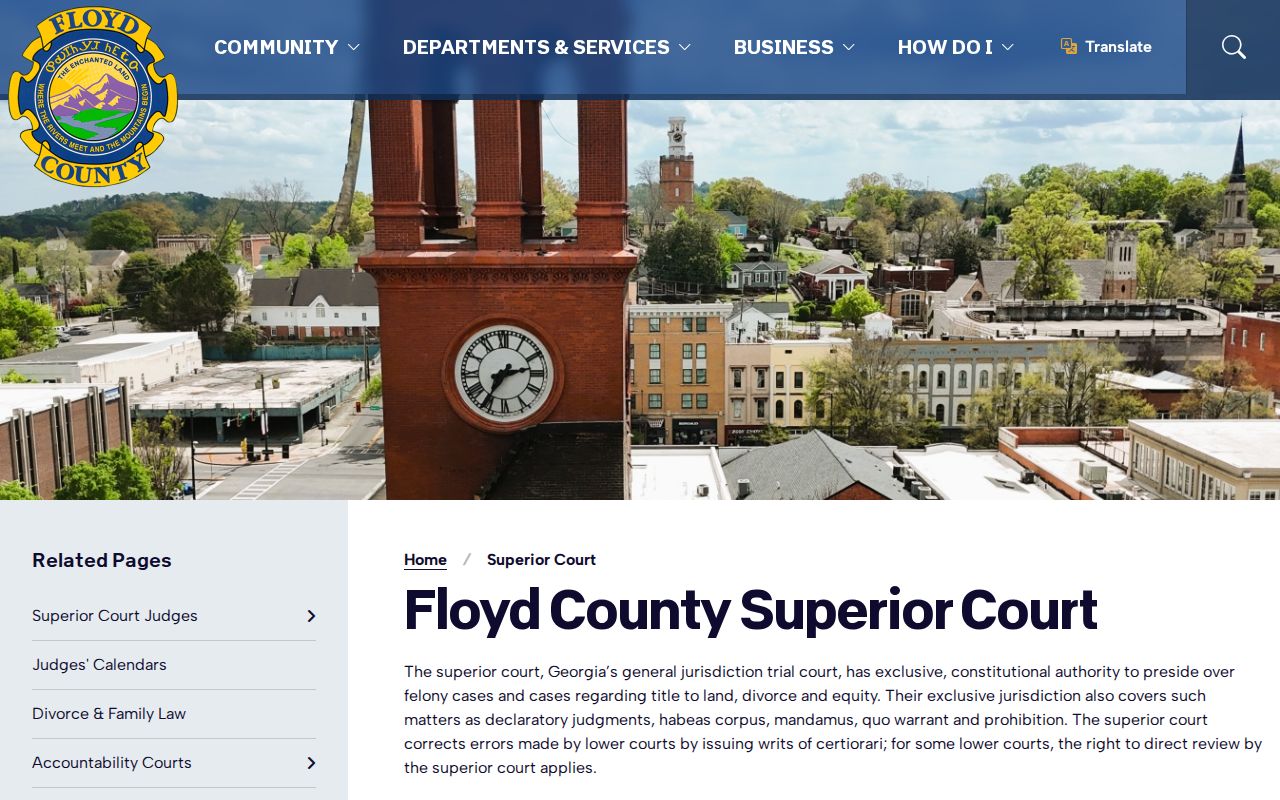
Floyd County Magistrate Court publishes its warrant and hearing roles on its own site, without exposing private case information.
Floyd County Bench Warrant Checks
Use every channel that fits. The FCSO-linked CentralSquare portal gives a first pass at a county search, and the Warrant Division can confirm or route a question. The issuing court, whether municipal, Probate, Magistrate, State, or Superior, explains its own docket and recall steps. NextRequest offers a formal route to existing county records. Georgia has no single statewide warrant database. If you missed court, move fast. Have your full legal name, date of birth, citation or case number, court date, and likely agency at hand. Ask whether an appearance is mandatory, whether bond is set, and whether counsel can arrange the next step. Never assume a warrant expired; Floyd County sets no automatic expiration period. For the full picture of your options, see the Floyd County warrant records home.