
Outstanding Warrants in Floyd County
An outstanding warrant is judicial process that a judge has signed but nobody has yet served, recalled, or quashed. In Floyd County, the Sheriff's Office Warrant Division keeps the original warrants and updates them in the Georgia Crime Information Center and National Crime Information Center systems. The issuing judge still runs the legal case, so the court matters as much as the list. Floyd County draws its warrants from more than one bench. Magistrate Court executes arrest and search warrants for county, city, state, and federal agencies. Rome Municipal Court issues warrants for matters inside Rome city limits, and Cave Spring Municipal Court handles its own city matters. A sheriff's list is a good first look. It is not a substitute for finding the issuing court.
Floyd County's CentralSquare Warrant Portal
The official route runs through the FCSO warrant page and its CentralSquare warrant portal. The portal builds its search fields on the fly, so read the controls it actually offers rather than assuming it takes a date of birth, a warrant type, or a date range. Treat it as a first pass, not a final word. For a human confirmation, the page names the Warrant Division as the keeper of the original warrants and gives 706-236-2466. Posted hours run Monday through Friday, 8:00 a.m. to 7:00 p.m., and callers should confirm the current schedule before relying on them. The official FCSO warrant page shows the route Floyd County uses for its active warrant search.
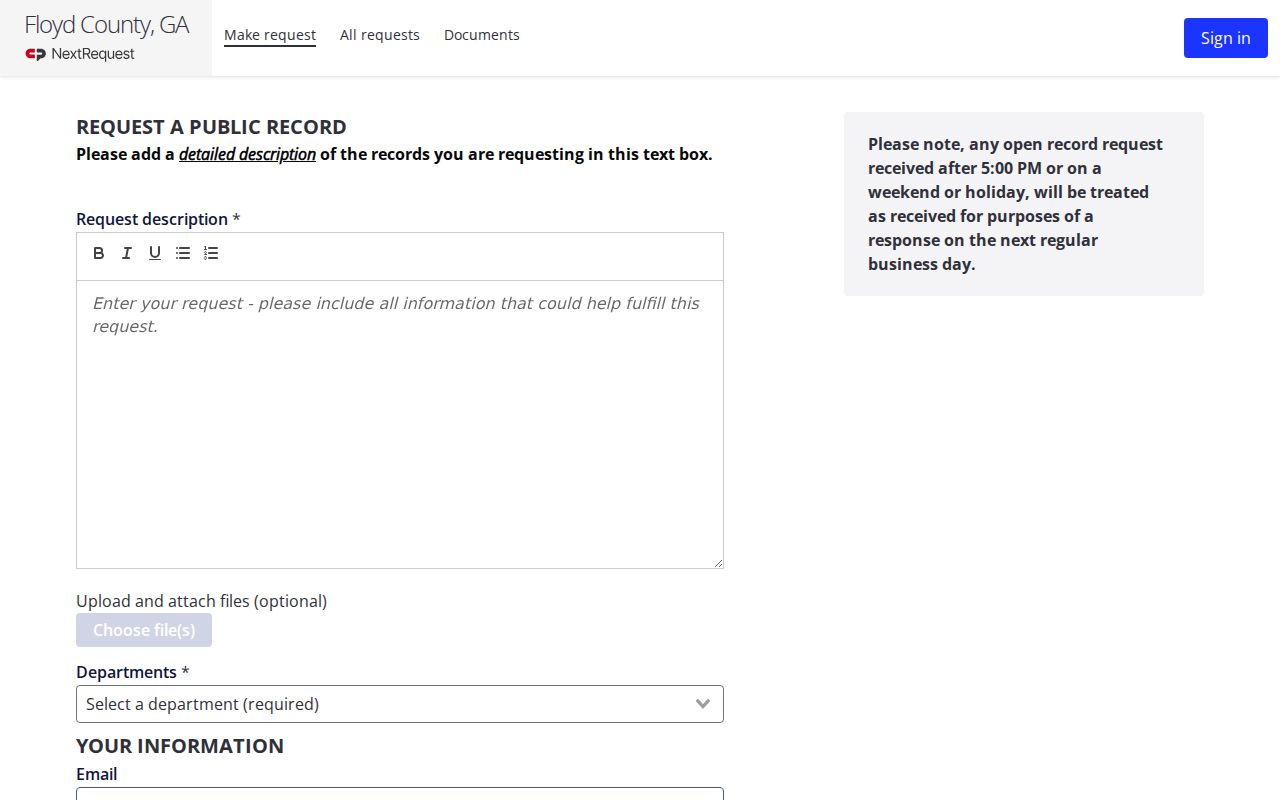
The sheriff's warrant channel is one thing; city courts, jail booking, and general county contact forms are others. The official Probate Court page documents a separate traffic-court route in Floyd County.
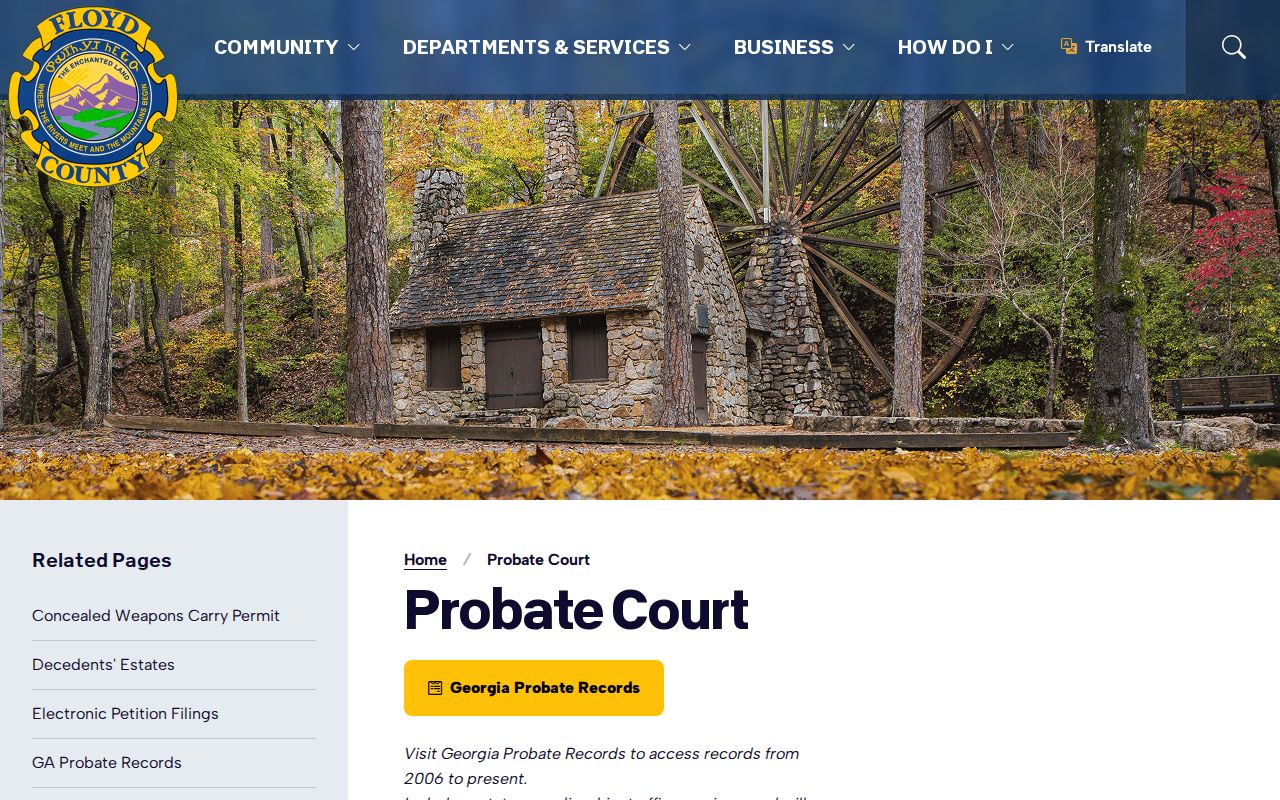
That court-specific channel shows why a county portal cannot answer every warrant question.
The Floyd County Active Warrant List
A public list pulls selected details from a working warrant system. It does not replace the signed warrant or the court file behind it. FCSO says it updates its warrants in GCIC and NCIC, which are law-enforcement systems, not public statewide search sites. Georgia has no single public warrant database covering every county, municipal, sealed, juvenile, or federal matter. The Floyd County pages post no completeness promise and no fixed update schedule. Fresh process may not show up right away. A served or recalled entry can linger until the systems sync. A city warrant may still call for a check with Rome or Cave Spring. Federal process belongs with the federal court and its law-enforcement path, not the county list.
Note: A missing name is not proof of clearance, and a visible entry still needs confirmation from FCSO or the issuing court.
Floyd County Warrant Status Questions
Three different questions get asked here: does a warrant exist, has it been served, and is a person in custody. The Warrant Division can route a status inquiry. For service status, the FCSO FAQ lists 706-291-4111 extension 8823 or 706-236-2466. After a booking, the Floyd County current-inmates page and the booking supervisor at extension 8834 handle custody and release questions, not the full active list.
| Question | Best Floyd County route | Limit |
|---|---|---|
| Does a county warrant appear online? | CentralSquare portal | Initial public view only |
| Is criminal process still active? | FCSO Warrant Division | Identity checks may apply |
| Was process served? | FCSO service-status line | Not a case disposition |
| Is the person now in custody? | Current-inmates page or booking | Not an unserved-warrant list |
Active Warrants: What They Show
Which fields the public sees depends on the live portal. The Floyd County inmate view shows what custody records can hold after booking: a charge, warrant type, warrant identifier, jurisdiction, and bond information. Don't project those fields onto every pre-arrest result. Read the labels as shown and note the issuing source.
| Warrant identifier | A reference used to distinguish the process; no single Floyd format was confirmed. |
|---|---|
| Charge or offense | The allegation linked to the warrant, not a conviction. |
| Issuing court or jurisdiction | The office that controls the case and resolution path. |
| Issue or service date | Separate events that should not be treated as the same status. |
| Bond information | A custody-related term that must be confirmed with the court or jail. |
| Disposition | Served, recalled, quashed, or another outcome if the source exposes it. |
A quashed warrant is one the court has set aside. A recalled Floyd County warrant has been withdrawn by court action, and a blank search row proves neither one.
When Floyd County Sources Conflict
Write down the date and source of any result. Then call the office holding the original process. Give your full legal name, date of birth, the likely court, and any citation or case number. Ask whether the status is active, served, recalled, or disposed, and which court entered the last action. If an online result and a court answer disagree, get clarification before showing up in person. Statewide Georgia guidance warns that a self-check at a counter can turn into immediate custody when a warrant is active. A lawyer can arrange an orderly, safer response. For a paper trail, Floyd County NextRequest can request narrow existing, non-exempt records. The Georgia Open Records Act does not force an office to create a new clearance certificate.
- Preserve the result without posting it publicly.
- Confirm the issuing court and jurisdiction.
- Ask which record controls and when it changed.
- Keep any disposition or recall order.
Floyd County Warrant Roundups
FCSO runs a Top 10 Most Wanted program and refreshes it as cases change. It is a selected public-information list, not the full set of Floyd County active warrants. The county has no amnesty program or warrant-specific waiver. No office here publishes a routine roundup calendar either.
Key Point: Read the official FCSO Most Wanted page directly for current names and photographs.
The sheriff expressly says listed people are accused and have not been found guilty.
The official program page supplies that due-process warning and the current agency context.
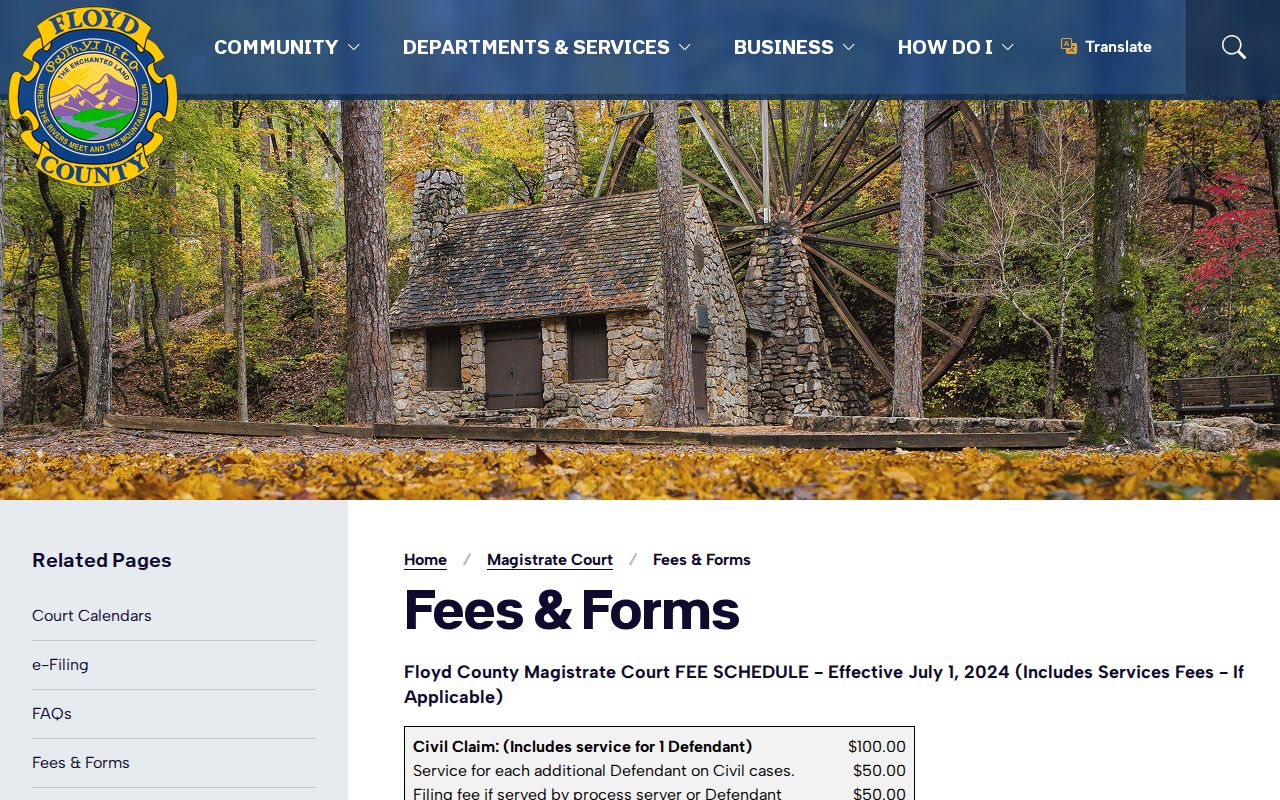
Floyd County's Magistrate Court handles criminal warrant work, and its official page lays out that role.
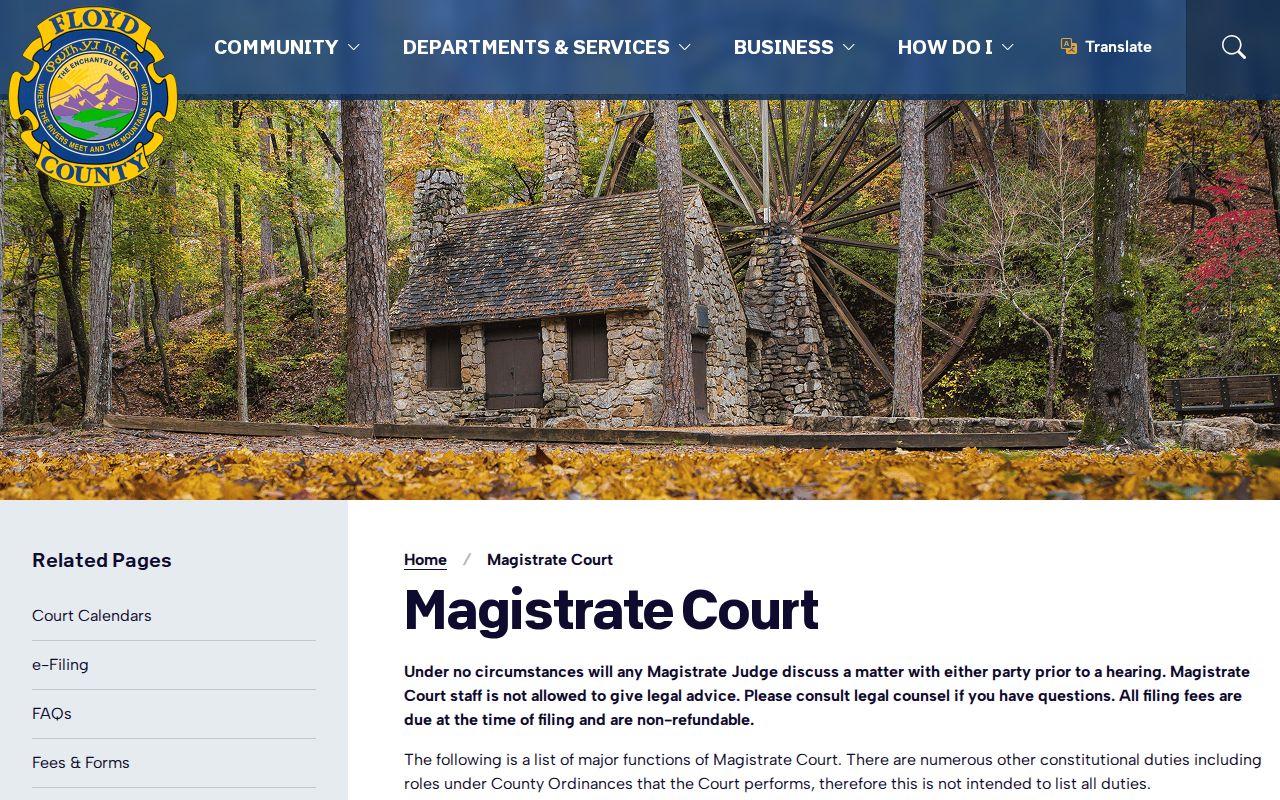
The court description adds the judicial channel without displaying any private record.
Legacy Floyd County Warrant Links
Old bookmarks can mislead in Floyd County. The sheriff's Most Wanted page still links a Zuercher portal labeled "View All Warrants," but that legacy page shows a maintenance notice now. It is not the current search just because an official page still points there. The active FCSO warrant page sends people to CentralSquare instead. Start each search from the sheriff's own warrant page, then verify anything material by phone. If both links fail, remember that an outage does not clear a warrant. The Warrant Division, the issuing court, and the formal records process all remain open channels. This local transition also explains why two residents following different saved links may see different screens. Neither screen settles legal status. Only the court can do that.
Finding Your Own Name on the List
Do not walk into the courthouse or jail just to ask. Call FCSO first, or talk with a Georgia criminal-defense lawyer. Confirm the issuing court, your custody risk, what ID you need, bond eligibility, and whether a scheduled surrender is offered. Floyd County publishes no guaranteed walk-in procedure or same-day judge schedule. Resolving an active warrant can mean voluntary surrender, posting an authorized bond, or appearing in the issuing court. Counsel can also file a motion to recall or quash. That motion is a formal request, and the judge, not the public portal, decides whether process is withdrawn. The broader Floyd County warrant records overview maps the court, jail, and bond routes side by side.
Important: Consult counsel before surrender, and call 911 only for an immediate threat rather than approaching anyone shown on an official list.
Floyd County Records and Access
The Georgia Open Records Act backs your access to existing public agency records, subject to exemptions. A focused request helps. Name the date range, originating agency, record type, and the fields you want. If part is withheld, ask for the legal basis. Don't ask Floyd County to build a new database, hand you a legal conclusion, or list private people. Sealed process and juvenile material may stay restricted, and an affidavit can stay unavailable while a matter is sealed or an investigation is protected. Municipal records may belong to the city custodian rather than Floyd County. A federal record goes through the Northern District of Georgia clerk or PACER, though sealed federal material will not appear. For ordinary active-warrant access, the full chain runs from the sheriff portal to the Warrant Division phone, the issuing court, and NextRequest for existing records. Each channel serves its own purpose. None of them alone promises a final legal determination.